

Suppose you’re financing a $400,000 home in Fairfax County with a conventional loan. If your pay stubs, tax returns, and bank statements are complete and consistent when you apply, many lenders can lock a rate near 6.5%, putting your principal and interest payment around $2,528 a month. If missing documentation pushes your file past a rate lock deadline and you end up closing at 7.0% instead, that same loan runs about $2,661 a month, a $133 difference that adds up to roughly $7,980 over five years. Paperwork readiness is not a formality, it directly affects what you pay. This comparison looks at how six mortgage providers, including Grand Rates’ independent rate-comparison and consulting service, help borrowers assemble and submit pay stubs, W-2s, tax returns, bank statements, identification, and gift letters before and during the application process in 2026.
Duane Buziak, NMLS #1110647, put this comparison together after years of walking Virginia borrowers through exactly this step. Before you compare tools, it helps to know the vocabulary lenders use. Pre-qualification is a quick, often self-reported estimate of what you might borrow; pre-approval involves an underwriter reviewing actual documents and typically requires a credit pull. A soft credit pull, the kind Grand Rates uses for rate comparisons, does not affect your score, while a hard pull, which happens when you formally apply with a lender, can cause a small, temporary dip. Conditional approval means an underwriter has cleared your file except for a short list of remaining items, often an updated bank statement or an explanation letter. For VA borrowers, the Certificate of Eligibility (COE) is the document that confirms your service-based entitlement to a VA loan.
Quick Comparison
- Grand Rates: best for borrowers who want to know their document list before choosing a lender; free; the only option here offering lender-agnostic document guidance with no credit hit.
- Rocket: best for tech-comfortable W-2 borrowers; pricing varies by profile; the most automated self-serve document dashboard on this list.
- Guild Mortgage: best for buyers who want a local loan officer; pricing varies by profile; pairs a national portal with branch-level, in-person support.
- NFM Lending: best for renovation or down-payment assistance borrowers; pricing varies by profile; program-specific checklists across a broad loan menu.
- Movement Mortgage: best for straightforward W-2 files; pricing varies by profile; in-house underwriting designed to move simple document reviews quickly.
- Veterans United: best for VA-eligible borrowers; pricing varies by profile; the deepest specialization in COE retrieval and military income documentation.
1. Grand Rates
Grand Rates is an independent mortgage rate-comparison and consulting service built for borrowers who want clarity before they commit to any single lender’s application. Rather than functioning as a lender itself, it works as a consultative layer: you get guidance on which documents your specific scenario will require, whether that is a conventional purchase, a jumbo loan, or an investment-property refinance, before you start uploading paperwork anywhere.
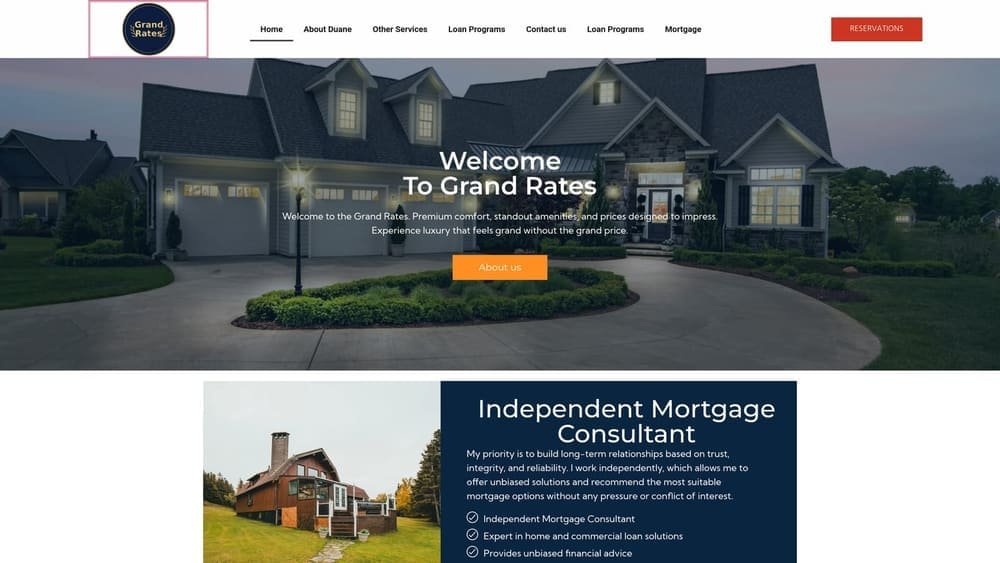
What sets it apart on this list is the sequencing. Every other provider here collects documents after you have chosen to apply with them. Grand Rates helps you understand the document picture first, using a soft credit pull for rate comparison so your score is not affected while you shop, then connects you with wholesale lender options once you know what you are working with.
- Compares rates across wholesale lenders without triggering a hard credit inquiry
- Walks you through a document checklist tailored to your loan type before you apply anywhere
- Provides financial advisory support for home buying and real estate investment scenarios
- Operates independently of any single lender’s underwriting overlay, so guidance is not slanted toward one program
Setup is a conversation, not a portal login: you speak with an independent consultant who reviews your income type, down payment, and property use, then maps out the paperwork you will need. The consultant runs the process day to day; there is no self-service upload dashboard to manage on your own.
That absence of a proprietary upload portal is the trade-off. Once you decide which lender to move forward with, you submit your documents through that lender’s own system, not through Grand Rates. Borrowers who want everything, comparison and document submission, in one branded app should expect an extra step here.
Pricing is straightforward: the service is 100% free to borrowers, with no fee for rate comparison or document consultation.
Best for: Borrowers who want to know exactly what documents to gather before deciding which lender to apply with.
2. Rocket
Rocket built its reputation on a fully digital mortgage process, and its document handling reflects that. As of 2026, borrowers work through an online dashboard that lists required items, accepts uploads directly, and updates in real time as documents clear review.
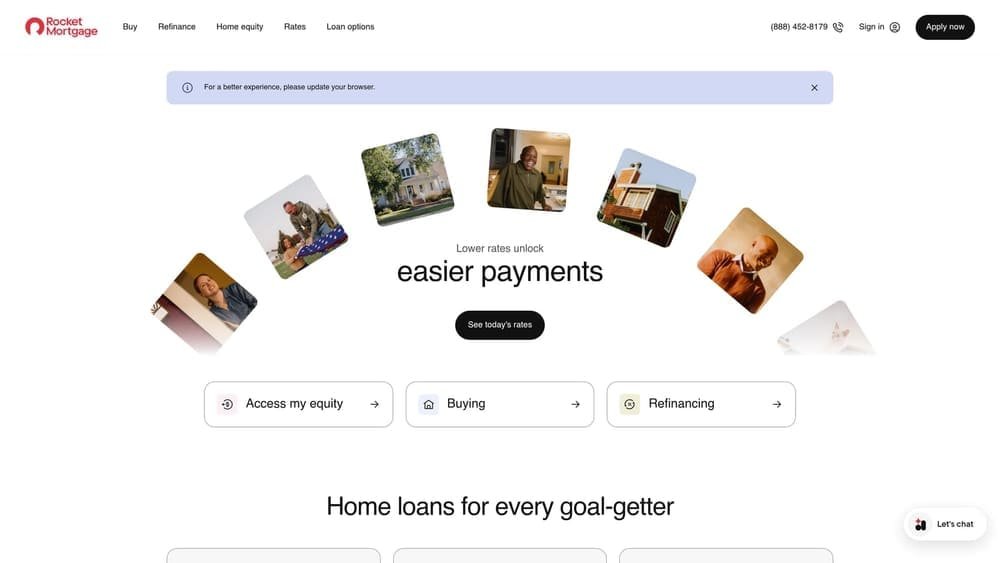
Its distinguishing feature versus the rest of this list is the degree of automation. Rocket can link some bank and asset accounts electronically, which reduces the need to manually download and upload statements for straightforward W-2 income files.
- Uploads pay stubs, tax returns, and identification directly into a tracked dashboard
- Links certain bank and asset accounts to pull statements electronically instead of manual upload
- Shows real-time checklist status so you know exactly what is outstanding
- Tracks loan progress through a mobile app alongside the desktop dashboard
Setup is entirely self-directed: you create an account, connect what you can, and upload the rest. There is no in-person loan officer relationship built into the base experience the way there is with a branch-based lender.
The heavy automation is less useful for borrowers with non-traditional income. Self-employed applicants, those with multiple income streams, or investors with several financed properties often still need manual document review and back-and-forth with a underwriter, which the self-service model handles less smoothly than a dedicated loan officer would.
Pricing is quote-based and depends on your credit profile, loan amount, and program, so check current terms directly on the site.
Best for: Tech-comfortable borrowers with straightforward W-2 income who prefer a self-service digital process.
3. Guild Mortgage
Guild Mortgage combines a centralized digital portal with a network of local loan officers, which changes how documents get reviewed compared with a purely online model. You upload through the portal, but a person in your area is typically the one following up on missing items and explaining conditions.
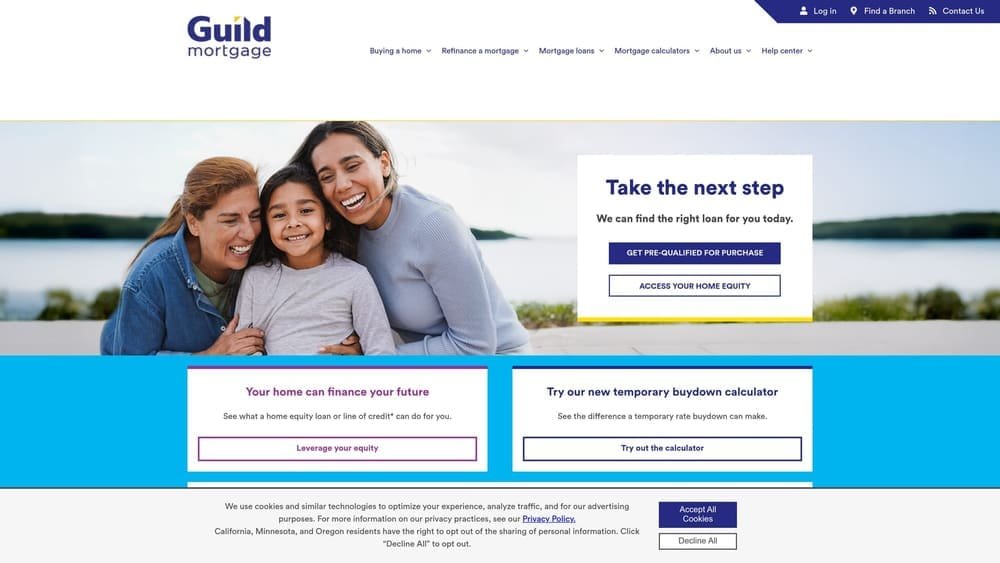
Its main advantage here is that blend: national infrastructure paired with a local point of contact who can walk you through document requirements for programs like down-payment assistance, which can carry their own paperwork beyond a standard conventional file.
- Centralizes document upload and e-signature for disclosures in one portal
- Connects you with a branch-based loan officer for direct questions
- Supports a range of loan programs, including down-payment assistance options with their own documentation needs
- Provides a status dashboard so you can see where your file stands
Because a person, not just software, drives much of the follow-up, the experience can vary. Some branches move quickly with clear communication; others take longer to flag outstanding conditions, since responsiveness depends on the individual loan officer’s workload.
Borrowers who want a fully automated, hands-off digital experience may find the local-officer layer adds a step they were not looking for. It suits people who value a relationship over pure speed.
Pricing is quote-based and tied to your loan program, rate lock, and credit profile; confirm current figures on the site.
Best for: Buyers who want local, in-person guidance alongside an online document portal.
4. NFM Lending
NFM Lending runs a digital document portal similar in structure to the larger national lenders, but its differentiator is the breadth of loan programs it supports, from conventional and jumbo to renovation loans and down-payment assistance products.
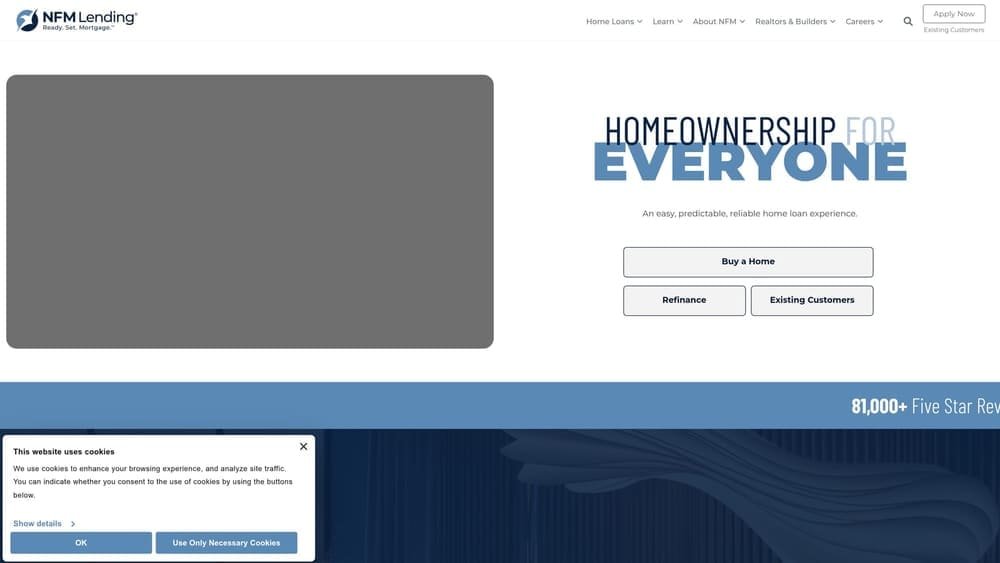
Program-specific checklists
That program range matters for documentation because a renovation loan, for example, typically requires contractor bids, project scopes, and draw schedules on top of the standard income and asset paperwork. NFM builds checklists tailored to the specific program you are pursuing rather than a one-size-fits-all list.
- Uploads documents through an online portal tied to your loan officer’s file
- Generates checklists specific to conventional, jumbo, renovation, or assistance programs
- Offers loan officer-assisted review before documents go to underwriting
- Covers a wider menu of specialty products than several larger competitors
Where it falls short
NFM’s regional footprint is smaller than the largest national lenders, which can mean support hours are tied more closely to your loan officer’s local time zone. Borrowers who need round-the-clock digital support without a dedicated point of contact may find that limiting.
Setup runs through your assigned loan officer, who manages the portal and reviews documents as they come in; this is a hybrid of self-service and personal guidance rather than a fully automated system.
Pricing is quote-based and depends on the loan program, credit profile, and any renovation or assistance components involved.
Best for: Borrowers considering renovation loans or down-payment assistance programs that need specialized documentation.
5. Movement Mortgage
Speed is the pitch at Movement Mortgage, and its document process is built around that. Because underwriting is handled in-house rather than routed through a third-party processor, a dedicated loan officer can review your document checklist and flag gaps without waiting on an external team.
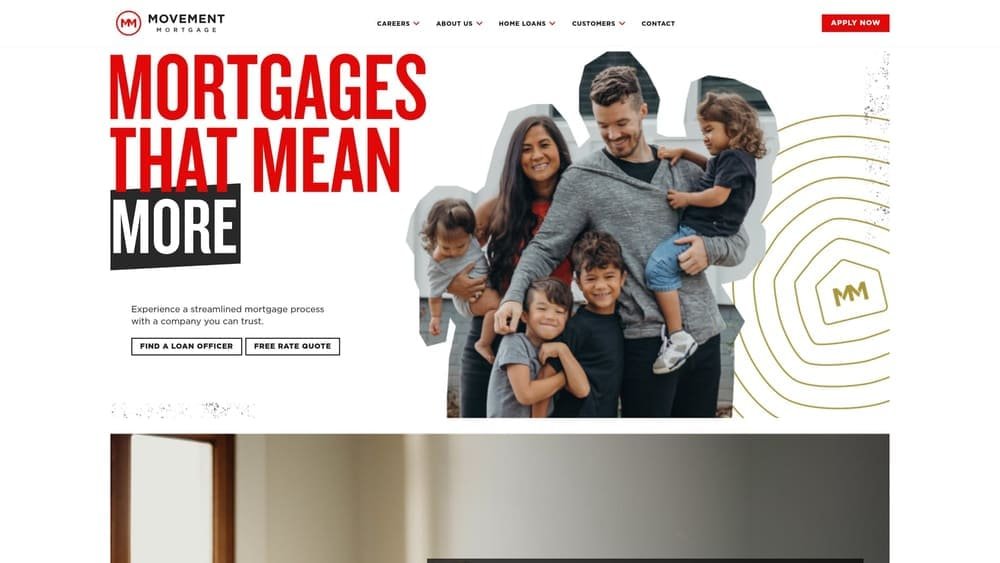
Compared with the rest of this list, Movement’s in-house underwriting model is the structural feature designed specifically to compress the time between document submission and conditional approval for straightforward files.
- Uploads and tracks documents through a mobile app rather than a desktop-only portal
- Routes files to in-house underwriters instead of an outside processing company
- Assigns a dedicated loan officer to review your document checklist directly
- Operates under a community-lender service model with local branch presence in many markets
The speed advantage is strongest for borrowers with simple W-2 income and clean, consistent bank statements. Files with self-employment income, multiple properties, or complex asset sourcing still require the same layered documentation as anywhere else, and the in-house model does not eliminate that underwriting depth.
Setup is managed through your assigned loan officer and the mobile app together; you are not left to interpret checklists entirely on your own, but you do need to respond promptly to keep the faster timeline intact.
Pricing is quote-based, varying with loan amount, program, and credit profile.
Best for: W-2 borrowers who want a dedicated loan officer and an in-house underwriting process.
6. Veterans United
Veterans United focuses specifically on VA loans, and its document process is built around the paperwork unique to that program, starting with Certificate of Eligibility retrieval. Under VA eligibility guidelines, most borrowers need a COE on file before closing, and Veterans United’s team handles that retrieval directly rather than leaving it to you.
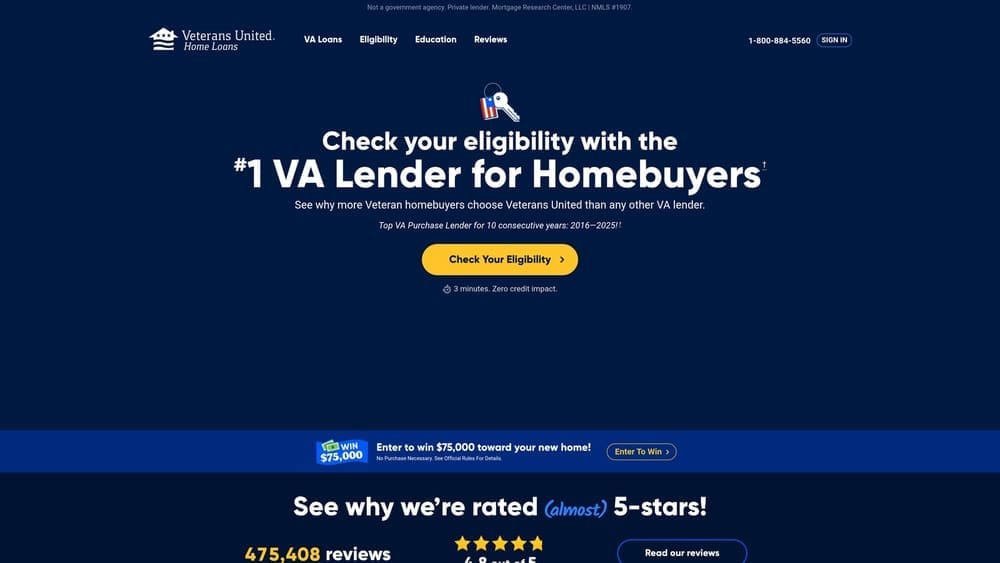
Its distinguishing strength is depth in military-specific documentation. Active-duty income can involve Leave and Earnings Statements, basic allowance for housing, and deployment considerations that a generalist lender’s checklist may not address as thoroughly.
- Retrieves your Certificate of Eligibility as part of the standard document process
- Provides guidance on reading and submitting Leave and Earnings Statements and other military income documents
- Offers a dedicated borrower portal for tracking document status
- Assigns a loan team as your ongoing point of contact through closing
Because the entire model is built around VA loans, non-veteran borrowers looking at conventional, jumbo, or investment-property financing will find less specialized guidance here than at a lender built to serve a broader mix of programs.
Pricing is quote-based; VA loans carry their own funding fee structure set by the Department of Veterans Affairs, which is separate from lender pricing and varies by service history and down payment.
Best for: Active-duty service members and veterans navigating VA loan documentation.
Common Document Mistakes That Delay Closing
Regardless of which provider handles your file, a few recurring errors slow underwriting down. Submitting bank statements that are more than 60 days old is one of the most common, since most conventional guidelines under CFPB application guidance expect the two most recent monthly statements, updated as your closing date approaches. Leaving out a side income source, even a small one, can trigger a debt-to-income recalculation mid-file. And letting more than one lender pull your credit outside a narrow shopping window can affect your score more than a single soft pull ever would, which is part of why comparing rates through a soft-pull service before applying formally is worth the extra step.
In Fairfax County, Virginia, median days on market and local closing timelines can compress the window for gathering documents; Fannie Mae housing forecast data tracks regional trends that affect how quickly lenders expect a file to move from application to closing, and having your paperwork ready before you apply reduces the risk of missing a rate lock deadline in a fast-moving market like this one.
Frequently Asked Questions
What documents do I need to apply for a mortgage? Most lenders ask for two years of W-2s or tax returns, 30 days of recent pay stubs, two months of bank statements, a government-issued ID, and, if applicable, a gift letter documenting down payment funds from a family member.
How recent do bank statements need to be? Lenders generally want the two most recent consecutive monthly statements, and you may need to provide an updated statement if your application takes longer than expected to process.
Do self-employed borrowers need different documents? Yes. Self-employed applicants typically provide two years of personal and business tax returns, a year-to-date profit and loss statement, and sometimes 1099s or business bank statements to verify consistent income.
Will comparing rates hurt my credit score? Comparing rates through a soft credit pull, the method Grand Rates uses, does not affect your credit score; a hard pull only occurs once you formally apply with a chosen lender.
What credit score do I need for a conventional loan? Requirements vary by lender and program, but many conventional loans require a minimum credit score in the mid-600s, with better pricing generally available above 740.
What is the difference between pre-qualification and pre-approval? Pre-qualification is a quick estimate based on self-reported information; pre-approval involves an underwriter reviewing actual pay stubs, tax returns, and bank statements, and typically requires a credit pull.
What is a Certificate of Eligibility and who needs one? A COE, issued through the Department of Veterans Affairs, confirms a service member’s or veteran’s entitlement to a VA loan and is required before closing on that loan type.
How does Grand Rates differ from applying directly with a lender like Rocket or Movement Mortgage? Grand Rates compares rates across wholesale lenders and advises on documentation before you commit, using a soft credit pull, while Rocket and Movement Mortgage are lenders you apply and submit final documents to directly, typically with a hard credit pull at application.
Can I use gift funds for my down payment, and what documentation is required? Many loan programs allow gift funds with a signed gift letter stating the funds are not a loan, along with documentation showing the transfer of funds from the donor’s account to yours.
Why would a lender ask for an explanation letter? Underwriters request letters of explanation when they see large or irregular deposits, credit inquiries, or gaps in employment, so they can document the reason before finalizing conditional approval.
Choosing the Right Starting Point
If you have not settled on a lender yet, start with Grand Rates. Getting a document checklist tailored to your scenario before you apply anywhere means you walk into your chosen lender’s process with paperwork ready instead of scrambling after the fact. If your income is straightforward W-2 and you are comfortable managing everything through an app, Rocket or Movement Mortgage’s digital upload portals will likely feel efficient. If you would rather talk face-to-face with someone who can explain a condition in plain language, Guild Mortgage or NFM Lending’s local loan officer model may fit better, particularly if you are considering a renovation or assistance program. And if you are active-duty or a veteran, Veterans United’s COE retrieval and military income expertise make it the logical first call.
Get your free personalized rate comparison from an independent consultant recognized as one of Virginia’s top loan officers, with no obligation, no hidden fees, and no impact to your credit score.